

Australian Shepherd Grooming: Natural Coat and Feathering
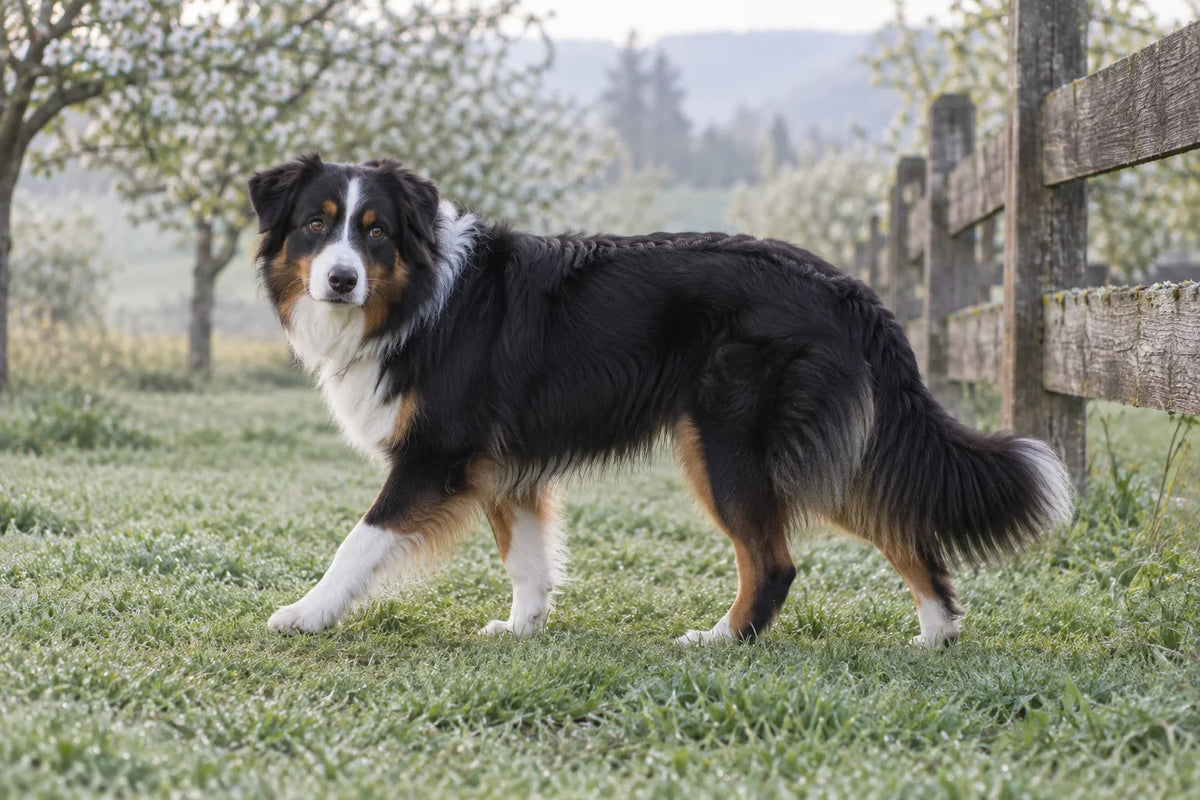
An Australian Shepherd can come home with grass in the feathering, dust in the coat and a perfectly cheerful expression. Before reaching for a bath or a haircut, separate the jobs: remove loose debris, check friction areas and decide whether the coat actually needs washing.
The natural double coat should remain. Good grooming reaches through it without scraping the skin or shaving away the body coat to make maintenance seem simpler.
Brush through, keep the outline. The useful work is beneath the surface and in the feathering. Routine body shaving is not the solution to shedding.
Know what you are trying to remove
The AKC Australian Shepherd profile describes a weather-resistant double coat that needs additional attention during heavier shedding. Loose undercoat is different from the attached outer hair that forms the dog's natural outline.
The Australian Shepherd Club's grooming guidance prioritises regular brushing and explains that shaving does not stop shedding. It also notes that relatively little trimming is needed to maintain the coat.
Judge progress by comfort and whether the coat separates freely, not by how much hair you can collect. Repeatedly working the same patch to create a bigger pile is not a useful goal.
Check the outdoor collection points
- Behind the ears and around the collar.
- Under harness straps and inside the front legs.
- Chest and belly feathering.
- The longer hair around the back of the thighs.
- Feet, toes and the underside of a full tail.
Remove loose plant material gently before it becomes tangled further into the hair. If something is embedded, painful or close to the skin, get help instead of digging it out with scissors.
Allow ordinary dry mud to loosen where appropriate, or rinse dirty lower legs when needed. Clean and dry the harness too. A clean coat beneath a damp gritty strap will soon need attention again.
Use small sections rather than surface sweeping
Part the coat to see the roots, then brush a manageable section with a suitable tool and light pressure. Work in the direction the hair lies. Move around the dog methodically so the thick rear coat does not receive all the attention while the armpits are missed.
For longer feathering, a VUNRO combination comb can check your work. Begin with wider teeth and stop at resistance. If a section catches, separate it to find out why rather than forcing the comb through.
Ask a groomer to demonstrate any undercoat rake on your dog's actual coat. It should help release loose hair, not scrape along the skin. Tools with cutting edges require particular care and are not a shortcut for an uncertain technique.
A weekly thorough check is a useful baseline, with extra short sessions during a shed or after messy outings. Adjust to the dog's density, length and tolerance rather than treating the calendar as a rule.
Choose between local cleaning and a bath
If only the feet and lower feathering are dirty, clean those areas. A whole-dog bath is more useful when dirt is widespread or the coat remains unpleasant despite ordinary brushing.
Check tangles first and arrange help for tight mats. Use a non-slip bath setup, comfortable water and dog shampoo according to its label. Rinse all the way through the chest, belly and dense rear coat.
Press out water with towels. A dog dryer can help when introduced gradually and used at a comfortable setting with moving airflow. Keep it away from the face and ears and never leave the dog unattended.
Part the hair at several points to check dryness. Surface fluff can hide damp roots. Once completely dry, finish with gentle brushing and a check of the feathering.
Blue Cross's bathing guidance supports choosing frequency around the dog and their activities.
Be specific when booking a tidy
Explain which areas collect dirt and whether you want the natural outline preserved. Modest foot or feathering work is different from a short body clip. Ask the groomer to show you what they propose before an imprecise request becomes a much larger haircut.
Tight mats or a particular welfare need require an individual decision. Do not try to preserve a cosmetic outline at the cost of painful brushing, but do not use routine shaving to avoid ordinary coat maintenance either.
Maintain nails alongside the coat
Active dogs still need nail checks. Different surfaces wear nails differently, and dewclaws may not contact the ground. Ask a groomer to show you the correct length and safe trimming margin.
The VUNRO nail grinder can smooth small amounts gradually. Keep feathering away from the rotating head, use short contacts and pauses, and stay clear of the quick. Stop if the dog becomes uncomfortable.
The finished dog should have a clean, dry natural coat, comfortable feathering and checked feet—ready for the next outing without an unnecessary haircut.
Keep learning
More from the Blade Blog

Whippet Grooming: Gentle Coat Care and Comfortable Nails
Read the guide →
Chihuahua Grooming: Smooth Coats, Long Coats and Tiny Paws
Read the guide →


